Partnering with Africa CDC to Strengthen the Health Workforce
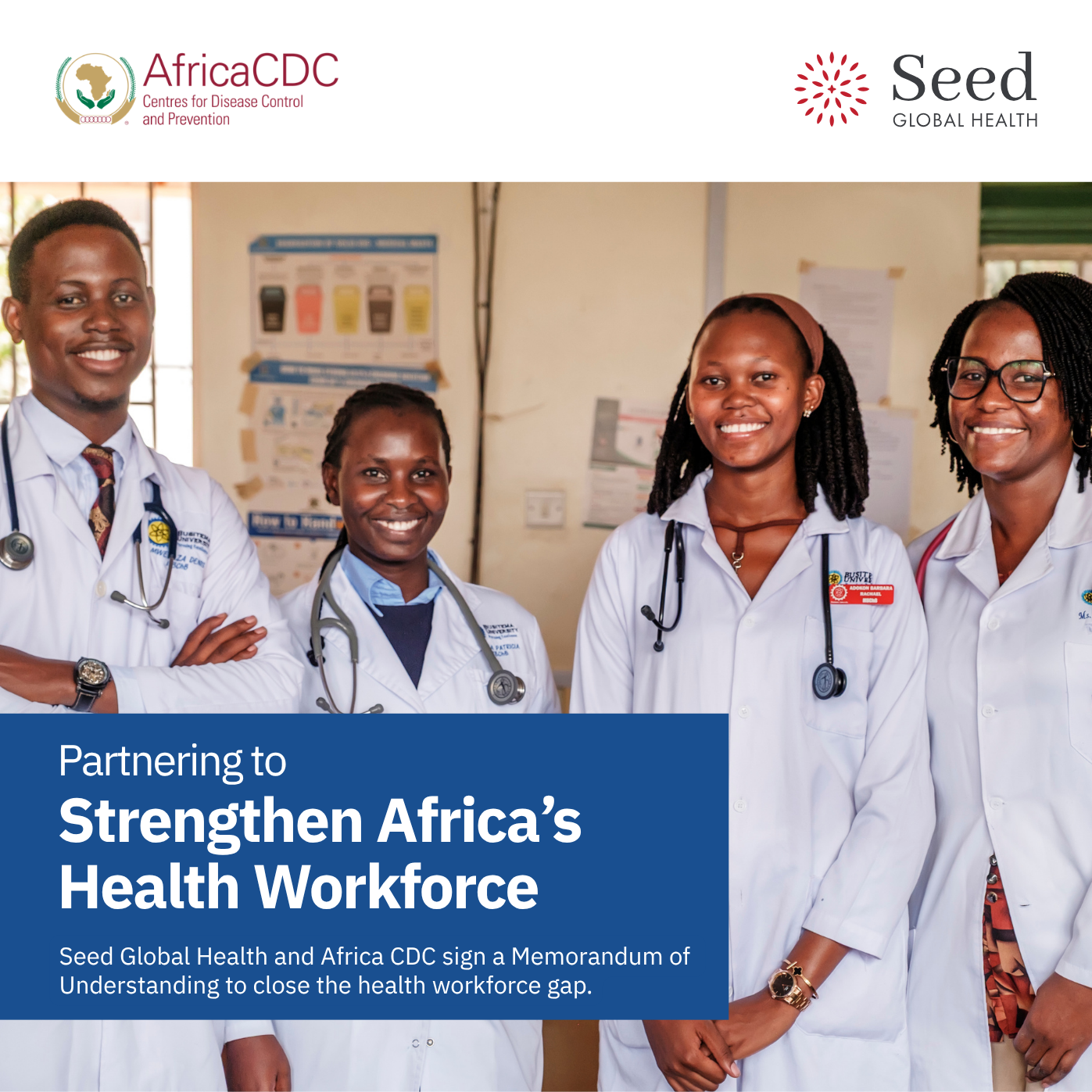
Seed Global Health (Seed) and Africa Centres for Disease Control and Prevention (Africa CDC) have signed an updated Memorandum of Understanding (MoU) to reaffirm our partnership to close Africa’s workforce gap.
The Workforce Gap
Investing in a skilled health worker is one of the best investments a country can make.
Currently Africa faces a significant health workforce challenge, carrying 24% of the global disease burden with just 3% of the world’s health workforce. This gap is projected to reach six million health workers by 2030.

More well-trained, well-supported health workers can improve maternal and child health, strengthen the management of infectious and non-communicable diseases, increase vaccination coverage, and reduce preventable deaths.
The health workers who deliver routine care also respond to disease outbreaks, extreme weather because of our changing climate, and are the pathway to universal health coverage (UHC).
A New Partnership for Action
Under our renewed partnership, Seed will support health workforce strengthening across Africa through technical collaboration, policy support, advocacy, and knowledge exchange.
Seed will continue to support Africa CDC’s leadership in advancing the African Union’s Health Workforce Compact – a continent-wide social compact with AU Member States to build a fit-for-purpose health workforce.
Seed will also provide strategic and technical expertise to support Africa CDC’s health workforce initiatives, including the national implementation of the Lusaka Agenda Accountability and Monitoring Framework and the Africa Health Security and Sovereignty Initiative across our four partner countries.

Building Africa’s Health Workforce
Health workforce investments can generate up to ten times value in direct economic terms, and more than 25 times when broader social and health benefits are included.
But closing the gap requires more than just training alone. It requires financing, planning, and strong systems to ensure trained workers are supported, deployed, retained where they are needed most, to deliver high-quality care to patients.
This partnership reflects a shared commitment to Africa-led solutions: ensuring the people who deliver care are properly trained, equitably distributed, and sustainably supported – the foundation of resilient health systems and a healthier, more secure future for all.