How Can Countries Turn National Health Plans into Action?
A New Forum Focuses on Turning National Health Plans into Action
As global health enters a new era, one question is becoming increasingly urgent:
How can countries turn national health plans into action when funding is shrinking, partners have different priorities, and too many programs still operate in parallel?
For decades, governments and development partners have agreed that investments should align behind national health priorities. Most countries have national health strategies, coordination mechanisms, and increasingly, National Health Compacts designed to guide health sector planning and financing.
The challenge ahead is for countries to truly lead on implementing these frameworks.
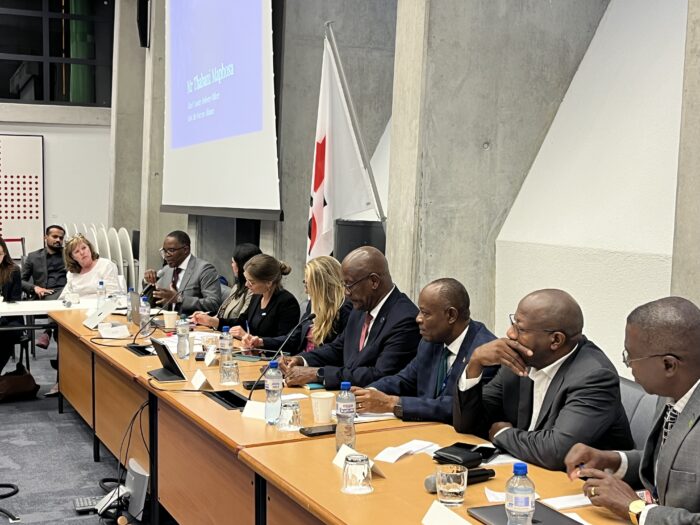
That’s why Seed Global Health launched the National Priorities Implementation and Partner Alignment Forum, bringing together ministries of health from Malawi, Sierra Leone, Uganda, and Zambia alongside WHO, the World Bank, Gavi, the Global Fund, other global health initiatives, and key institutional donors to identify practical solutions for turning national plans into coordinated action.
The Forum is part of Seed’s broader policy work to strengthen health systems for a new era of global health, one where countries increasingly lead their own health sectors and development partners align behind nationally defined priorities rather than parallel programs.
Why partner alignment matters more than ever
Health systems are being asked to do more with fewer resources following historic reductions in foreign assistance. While this moment has sharpened the challenge, it did not create it.
For years, governments have struggled with fragmented financing, overlapping initiatives, competing reporting requirements, and limited visibility into external investments. Even when countries have strong national plans, implementation becomes difficult when partners operate on different planning cycles, fund activities outside government priorities, or report through separate systems.
Improving partner alignment is one of the greatest opportunities to help countries maximize existing resources, strengthen accountability, and build more resilient health systems.
What is One Plan, One Budget, One Report (OPBR)?
Efforts to strengthen country ownership and align development partners behind national health priorities date back decades. One Plan, One Budget, One Report (OPBR) builds on these longstanding principles, providing a practical approach to aligning national planning, financing and reporting processes.
The concept is straightforward: rather than multiple parallel plans and reporting systems, governments and partners work through one shared framework that reflects national priorities.
Yet while the principles underpinning OPBR have been repeatedly and widely endorsed over decades, implementation remains difficult.
Persistent challenges including off-budget financing, limited visibility into future donor commitments, misaligned planning and funding cycles, earmarked funding, and parallel reporting requirements continue to prevent countries from fully realizing its potential. Even where coordination and systems exist, these do not automatically translate into aligned financing, joint decision-making or implementation.
Throughout the Forum, participants agreed that the challenge is no longer whether OPBR is the right approach. The challenge is making it work in practice.

How countries are advancing alignment behind national plans
The Forum highlighted the significant progress countries are already making to strengthen coordination and improve implementation.
- Zambia: Building greater transparency. Zambia has developed a government-owned tool that tracks who is funding what across the health sector while advancing resource mapping, OPBR, and its national Health Compact as one connected agenda. One challenge has been partners not sharing future funding plans. The country is exploring a “virtual budget” that could improve transparency and accountability without requiring all external financing to flow through government systems.
- Malawi: Moving toward longer-term planning. Four years into its One Plan reforms, Malawi is transitioningto multi-year planning. While important progress has been made, significant amounts of partner funding remainearmarked, limiting the flexibility needed for fully country-led coordination.
- Sierra Leone: Strengthening accountability. Sierra Leone’s fifth national resource mapping exercise is informing a new accountability agenda that includes pooled financing, spending floors, quarterly reconciliation,and annual reviews designed to strengthen alignment across partners.
- Uganda: Making financing visible. Uganda’s Partner Portal now tracks more than 230 partners, providing unprecedented visibility into investments, financing gaps, and geographic inequities. Yet more than half of health financing remains off budget, demonstrating that better visibility has not yet changed funding behavior.
The remaining barriers to alignment are structural
Countries increasingly have the plans, coordination platforms, and governance mechanisms needed to lead their health sectors. What often remains misaligned is how financing, accountability, and partner incentives operate around those systems.
WHO participants noted that governments cannot fully implement national priorities when large portions of financing remain outside national planning processes. At the same time, many development partners remainhesitant to rely fully on country systems until those systems become stronger, creating a cycle that is incredibly difficult to break.
Seed’s ongoing research on OPBR points to a similar conclusion. Lasting progress will require institutionalizing OPBR so that financing, accountability, and partner behavior consistently reinforce national strategies rather than bypassing them.
A new chapter for country-led health systems
As governments assume greater responsibility for financing and managing their health systems, improving partner alignment is becoming one of the defining policy challenges of global health.
Many countries that have lost critical external financing cannot yet deliver national priorities alone. Likewise, development partners cannot achieve sustainable impact without working through country-led systems.
The National Priorities Implementation and Partner Alignment Forum was created to help bridge that gap by supporting Seed Global Health’s partner countries in translating national priorities and commitments into practice, creating a practical space for governments, multilateral organizations, and technical partners to share implementation challenges, identify solutions, and accelerate progress together.
Seed Global Health will convene the Forum again in 2027 and publish the final findings from its OPBR research to help inform global policy discussions on country-led health systems, health financing, and partner alignment.
Read the full Summary Report from the inaugural National Priorities Implementation and Partner Alignment Forum.
For more information, please contact Marionka Pohl, Seed’s Senior Director of Policy.
Frequently Asked Questions
What is One Plan, One Budget, One Report (OPBR)?
OPBR is an approach to health sector governance that aligns governments and development partners behind a single national planning, financing, and reporting framework, helping reduce fragmentation and improve accountability.
Why is partner alignment important?
When governments and partners align behind national priorities, countries can use resources more efficiently, reduce duplication, strengthen accountability, and build more resilient health systems.
Why did Seed Global Health create the National Priorities Implementation and Partner Alignment Forum?
The Forum brings together governments, WHO, and technical partners to identify practical solutions that help countries implement their national health priorities, strengthen partner alignment, and accelerate country-led health system reform.