Lessons from Uganda’s Fight Against Outbreaks
When the first case of Ebola was confirmed in Uganda in May 2026 – linked to a recent traveller from the Democratic Republic of Congo where the outbreak started – the country was ready to respond.
Under the leadership of the Ministry of Health, Uganda sprang into action, activating emergency systems and isolation facilities in high-risk districts, deploying mobile laboratories near the border, strengthening surveillance and screening at borders, and rolling out risk communication campaigns throughout the country.

Over recent years, Uganda has successfully navigated multiple Ebola outbreaks and, as a result, has built a system of readiness and infrastructure designed to contain outbreaks before they escalate. This readiness is a result of sustained investment in health workers, health systems, and the partnerships that support them.
Seed Global Health is one such partner. Seed’s model is rooted in a simple idea: a well-trained health worker can respond to many different challenges and crises. It is this adaptability that makes health systems resilient.
When this outbreak started, Seed mobilised rapidly, working closely with the Ministry, and with support from committed funders, to strengthen the national response by training health workers and strengthening the systems they work in.
Training the workforce
Through the ECHO platform, where health workers are trained virtually, Seed has already trained over 3,000 health workers on infection prevention and control, mass gathering management, and referral pathways during outbreaks. These sessions equip frontline health workers with the knowledge and practical skills needed to safely detect, manage, and respond to Ebola. These trainings build the capacity of health workers with skills not just for this outbreak but also for the ones to come.
Strengthening communities
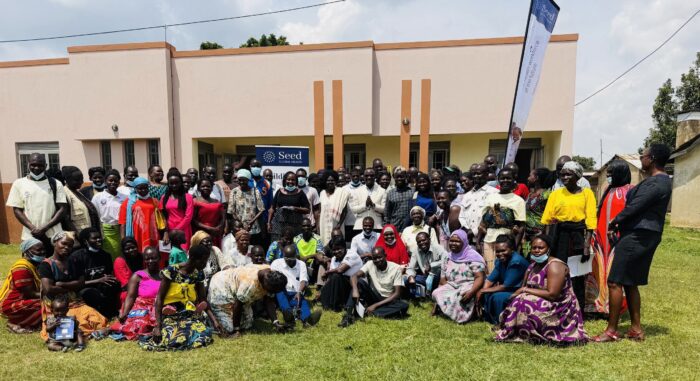
At the community level, Seed and the Ministry have trained 361 community-based health workers in Arua in community-based surveillance. Comprising community health extension workers, village health teams, and health assistants, these frontline community workers were trained to identify suspected cases, report alerts in real time, conduct contact tracing, and support mortality surveillance. Arua, which borders DRC where the outbreak started, community level preparedness is the first line of defence.
Seed is also supporting risk communication and community engagement by distributing materials to promote accurate information and protective behaviours across communities. By equipping more than160 health facilities with 1,000 Ebola job aides, the initiative is helping deliver lifesaving information to an estimated 2.5 million Ugandans.
Equipping health workers to stay safe

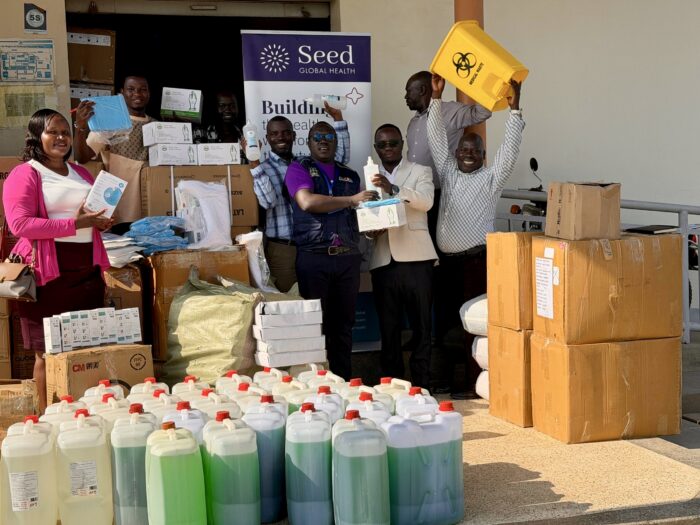
To ensure health workers could safely apply their skills, Seed provided personal protective equipment (PPE) to high-risk health facilities and ambulance teams across Mbarara, Hoima, and Arua Regional Referral Hospitals. The three facilities are in areas deemed risky due to their proximity to DRC.

Dr. Bwaga Ibrahim, hospital director of Hoima Regional Referral Hospital, welcomed the support. “It is very timely as we are involved in the evacuation of suspected Ebola cases. Hoima is very near the epicentre of the outbreak in DRC, and this will help us in our emergency operations,” he said.
Dr. Aniku Gilbert of Arua Regional Referral Hospital echoed this sentiment. “Arua RRH is very near the hotspot of the outbreak in DRC, and the support Seed has given us helps ensure our health workers are safe while managing patients,” he said.
Embedding technical expertise and shaping policy
Seed has also embedded a technical advisor within the Ministry to support case management, enhance coordination, strength the implementation of clinical protocols, and ensure alignment between national guidance and frontline care delivery. As well as the development of key policy documents, including quarantine guidelines and risk communication and community engagement frameworks. These efforts ensure a coordinated, evidence-based response at every level of the health system.
Irene Atuhairwe, Seed’s country director said, “Given Uganda’s proximity to the outbreak’s hotspot and the ease of movement between the two countries, it is imperative our health system is strengthened and alert to detect, respond, and contain outbreaks,” she said. “Seed remains steadfast in its support to the Ministry of Health in emergencies like this one, ensuring outbreaks are contained and lives are saved.”
Uganda’s ability to respond and contain the outbreak is a testament to what sustained health workforce investment makes possible. As the global community debates pandemic preparedness frameworks and the architecture of international health security, Uganda offers a real-life case study in what preparedness requires; people who are trained, equipped, supported, and ready.