
From specialist training to safer care: A nurse helping Malawi’s children thrive
Peter Ng’onamo is a senior nursing officer and one of the nurses in charge of the pediatric high-dependency unit at Mercy James Center for Pediatric Surgery and Intensive Care Hospital in Blantyre. One morning, he arrived on the ward to find colleagues worried about a young patient being treated for gastroschisis, a birth defect that causes an opening in the belly wall. The child had small reddish-purple patches on his upper limbs, and a larger one, about two centimeters across, on his forehead. The previous day, the child had received a blood transfusion for anemia, and the health workers and parents thought he was reacting to the transfusion.
Peter saw something else. “Based on the knowledge I had gained in school,” he said, these were typical signs of thrombocytopenia, a condition in which the blood has too few platelets, the tiny cells that help stop bleeding. Peter sat down with the parents and explained, which he said, “helped make the situation easier,” because now they understood what was happening.
The hospital laboratory had no platelets at first, but later that day the child received two units, and the team continued with gastroschisis care. The child eventually improved, proving yet again to Peter why specialist knowledge matters. The ability to recognize warning signs, interpret symptoms, and guide care greatly increases a child’s chances of survival. It also demonstrated how a clinician’s thoughtful information-sharing and communication builds trust with families at uncertain and unsettling times.
The importance of strong partnerships
Building a more resilient health system means not only having facilities equipped to treat critically ill children but also ensuring that health workers can recognize complications, make informed decisions, and provide appropriate and timely care. A survey for a training needs assessment involving nurses at Queen Elizabeth and Mercy James revealed that only two held a master’s degree. Most said they lacked adequate equipment, and nearly 90 percent expressed interest in pursuing a specialist pediatric critical care master’s program.
Kamuzu University of Health Sciences (KUHeS), QECH, and Mercy James partnered with Seed Global Health to offer this degree. While KUHeS leads the academic program, QECH and Mercy James Centre provide the health workers who train students and the facilities where they develop their skills. Working alongside existing faculty, Seed educators support curriculum development, teach and train pre- and in-service health workers, and strengthen clinical teaching and mentorship. This includes developing a preceptor training program for nurses to mentor and support students during their clinical placements.
Peter’s journey to enhance his skills
Peter was already working in the pediatric high-dependency unit when he decided he needed more. “I felt that my knowledge was limited.” His matron, who knew he wanted to upgrade his qualifications but was worried about fees, directed him to the Seed- supported master’s program
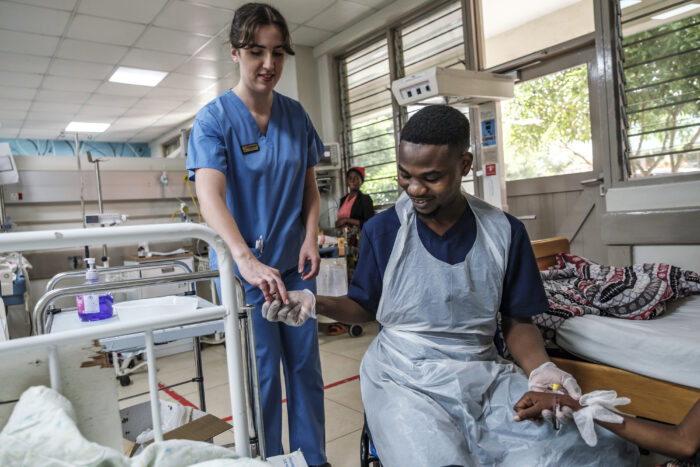
Before embarking upon his master’s in 2023, Peter joined the first cohort of Seed’s preceptorship program, a nine-month course in teaching and supervising students at the bedside. As nurse in charge, he was constantly answering questions from students and colleagues. The course deepened his knowledge and better equipped him to guide and support them.
The master’s program included a short placement in Kenya, which Peter said greatly increased his ability to care for his young charges. “My clinical reasoning has improved considerably, and I now approach patients differently.”

Training future generations
For Peter, strengthening pediatric care means ensuring that specialist knowledge does not stay with one nurse or ward. By mentoring students and training other nurses to supervise them, he is helping build a workforce better able to care for critically ill children.
Together with partners, Seed is also helping establish a regional center of excellence in maternal and newborn care that trains critical care nurses and other specialists at QECH.
Peter acknowledged that the job is challenging and that financial difficulties demotivate many people because nurses’ salaries are often lower than they expected. But Peter is dedicated to serving his country. “If all of us who have specialized training leave, these children will continue getting sick without receiving the appropriate help they need.”
In addition to his strong sense of mission, Peter has a strong sense of self. As a man in a female-dominated profession, he has heard negative comments for years. This does not upset him because “Nursing is not the wrong profession for a man. It’s about caring for people.” As Peter tells his students, “If you give your best to a patient, you lose nothing, and you may save a generation.”


